
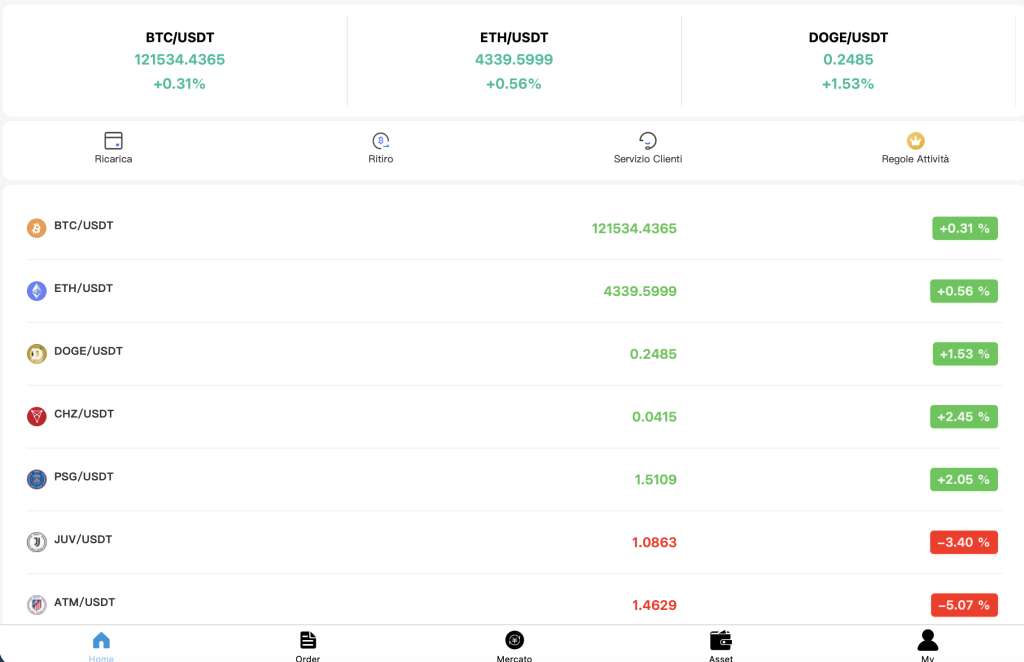
In the world of online financial services, new platforms constantly emerge, each promising cutting-edge technology, high returns, and exclusive access. zerotrillionworld.it is one such name that has caught the attention of many prospective traders and investors. On the surface, the site presents itself as a sophisticated fintech or signal service, offering enticing promises to those seeking passive income or “expert” guidance in financial markets.
Yet, beneath the slick interface and persuasive marketing lies a trove of red flags, suspicious practices, and structural inconsistencies. In this post, we dig into the evidence that points to ZeroTrillionWorld being a fraudulent operation — not a legitimate broker or signal provider.
What zerotrillionworld.it Claims to Be / How It Markets Itself
From observing its web presence and how it appears in reviews, here is how ZeroTrillionWorld tends to present itself:
It markets itself as a forex signal provider or digital finance solution, promising consistent profits, expert analysis, or high win-rates.
It implies it is using advanced strategies or tools, positioning itself as more than a “basic” broker — as a premium or elite service.
It often offers promotional language about “guaranteed returns,” “over 90% win rates,” or “rapid account growth.”
Its marketing directs prospective users to deposit via irreversible or non-traceable forms (e.g. crypto or wire transfers).
It relies on social media outreach, messaging apps, or direct contact to recruit new users.
These claims mirror those made by fraudulent operations seeking to lure trust through prestige and exclusivity.
Regulatory & Technical Red Flags
When assessing whether a platform is credible, a few foundational pillars must be evaluated: licensing/regulation, ownership transparency, domain and hosting characteristics, and reputation analysis. Zerotrillionworld struggles badly in all these areas.
1. Zero Verifiable Identity & Ownership Transparency
In many investigative reviews, ZeroTrillionWorld fails to provide credible contact information:
Its website lists no physical address, no phone number, and no clear “About Us” or corporate registration details.
Where one might expect to see executive names, registration numbers, or disclosures, there is either silence or vague statements.
The ownership of the domain is hidden or anonymized (via privacy protection), making the individuals behind the platform effectively untraceable.
This anonymity is a hallmark of scam operations — it shields perpetrators from accountability and complicates any attempt at recourse.
2. Domain & Hosting Anomalies
Technical domain analysis reveals additional red flags:
The site is relatively new: its registration and last update dates suggest it has existed only a short time.
The WHOIS data is obscured — ownership info is protected or masked.
Hosting is routed through services (such as Cloudflare) that can mask origin and infrastructure.
It shares server space or IP address ranges with other suspicious or flagged domains.
Tools such as ScamAdviser assign it a very low trust score, citing its newness, anonymized registration, low ranking, and hidden ownership.
These traits are common among websites created for short-term fraud operations, designed to vanish or reinvent themselves when flagged.
3. Reputation & User Complaints
When you look beyond the site’s own content to external sources, the following patterns emerge:
Many user reviews, forum posts, and blog reviews describe experiences consistent with scam behavior: deposits made but funds impossible to retrieve, support unresponsive, or accounts frozen.
Some reviews specifically accuse the platform of promising signals that never materialized or of being ghosted once users tried to withdraw.
The site has been flagged in regulatory warnings in Italy (CONSOB) or among lists of unauthorized platforms, indicating that authorities view it as an unauthorized operator.
Platforms that aggregate domain reputations (e.g. ScamAdviser) list it under “very low trust” with multiple negative indicators.
Because its reputation is overwhelmingly negative, the “safe-sounding” visuals don’t hold up under scrutiny.
Typical Scam Modus Operandi (As Inferred)
Although one cannot observe everything directly, combining known patterns of fraud with specific reports about ZeroTrillionWorld allows us to infer how the operation is structured:
Outreach & Recruitment
Users are often contacted via social networks, messaging apps, or cold outreach. The approach is persuasive, appealing to income aspirations, promising that this opportunity is limited or exclusive.Deposit Initiation & Demonstration Phase
New users are prompted to deposit money (often modest amounts first). They may receive signal suggestions, dashboards showing “profits,” or early small withdrawals to build trust.Escalation & Upsell
After some confidence is built, users are encouraged to invest more. They may be offered “premium signal” plans, upgrades, or “institutional access” packages to unlock higher returns.Withdrawal Barriers & Excuses
When users try to withdraw significant sums, they are met with excuses: “verification needed,” “compliance tax,” “processing fee,” or “platform volatility.” Even if small withdrawals were allowed earlier, the bigger ones are blocked or delayed indefinitely.Communication Shutdown or Disappearance
Over time, the platform may become unresponsive. Emails bounce, support lines disconnect, the website goes offline, and accounts become inaccessible.Domain Recycling / Rebranding
Once the domain is flagged or blocked, the operators may spin up a clone or variant site under a different name to start the same cycle anew.
How ZeroTrillionWorld Compares with Other Scam Models
ZeroTrillionWorld aligns with several known fraud archetypes:
Phony Signal / Forex Provider Scam: It promises guaranteed signals or strategies, but lacks any verifiable performance history (no linking to Myfxbook, FXBlue, or public audit).
Unlicensed Broker / Shadow Broker Model: It functions like a broker but with no regulation and no oversight.
“Pig Butchering” / Long Con Variant: While not always explicitly romance-based, it cultivates trust over time with the victim, then gradually leads them into more financial commitments before cutting off access.
Its methods reflect a blend of these paradigms, calibrated to exploit trust and delay suspicion until funds are locked.
Why the Red Flags Add Up
It’s instructive to review why, taken cumulatively, the warning signs form a compelling case for declaring ZeroTrillionWorld fraudulent:
Missing regulatory licensing is not a small oversight — it means user funds are not protected by custodial or regulatory rules.
Obscured ownership and hidden domain registration prevent accountability and traceability.
New domain age and masked technical infrastructure suggest a transient design.
Poor reputation and multiple negative user reports point to a pattern rather than isolated complaints.
Promises of guaranteed or extremely high returns contradict how real markets work.
Withdrawal issues are almost universally cited in user complaints — a core mechanism in fraudulent schemes.
Regulatory blacklists or warnings in one or more jurisdictions lend external validation to the suspicion.
When all these traits coincide, the probability that the platform is a scam becomes very high.
Practical Insights & Precautionary Lessons
While this blog avoids giving legal steps or recovery strategies, there are lessons one can draw:
Always verify licensing and regulation before trusting a platform.
Demand full transparency (physical address, regulatory registration, ownership).
Test small withdrawals first — if those fail, it’s an early red flag.
Don’t respond to promises of “guaranteed returns” or “no risk.”
Be skeptical of outreach from unknown “signals” providers, especially those that push you quickly to deposit.
Use domain and reputation tools (WHOIS, ScamAdviser, independent reviews) as part of due diligence.
By internalizing these cautionary principles, one can reduce the chance of falling victim to similar scams.
Concluding Thoughts
ZeroTrillionWorld (zerotrillionworld.it) is a striking example of how modern online frauds operate under a glossy façade. Its combination of hidden ownership, lack of regulation, dubious domain characteristics, negative user experiences, and promises that defy financial logic all point toward a fraudulent scheme — not a legitimate service.
While the world of trading and signals offers genuine opportunities, platforms like ZeroTrillionWorld exploit ambition, trust, and hope. They survive until suspicion grows, then vanish or rebrand. As a cautionary example, ZerotrillionWorld can teach observers what to look for — and what to avoid — in the vast, murky territory of online finance.
HOW GAINRECOUP.COM CAN HELP YOU RECOVER YOUR FUNDS FROM THIS SCAM
GainRecoup.com helps victims of zerotrillionworld.it recover lost funds through professional case assessment, transaction tracing, and dispute handling. Their team gathers evidence, liaises with banks or payment processors, and initiates chargebacks or fund recalls. They streamline the recovery process, maximizing the chances of retrieving money lost to fraudulent trading platforms.